SafeHer - AI-powered system that identifies unsafe locations
Link to open source: https://github.com/tanishijanweja/SafeHer
Link to Live Project: https://safe-her-lilac.vercel.app/
About SafeHer
What this build is about
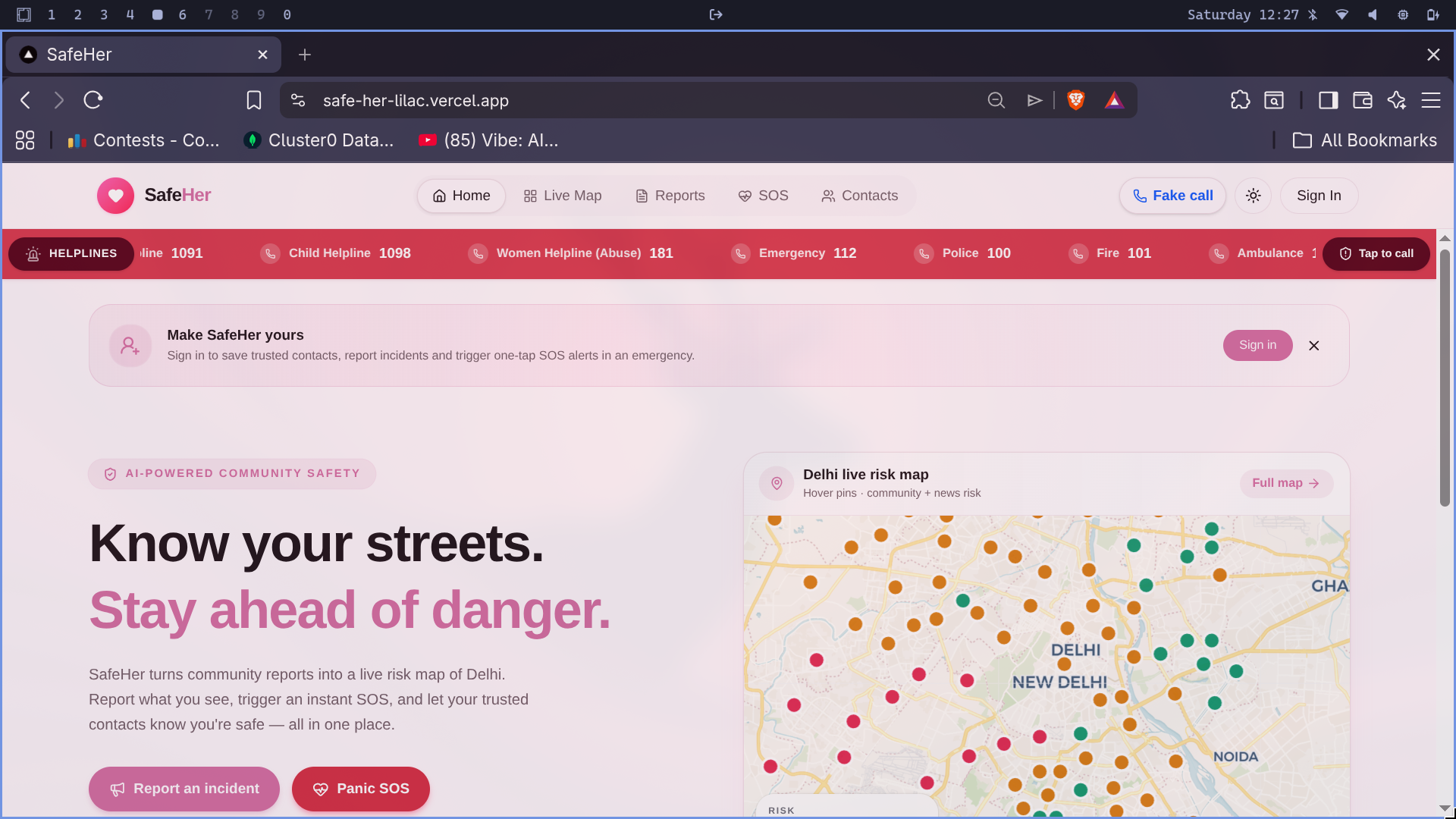
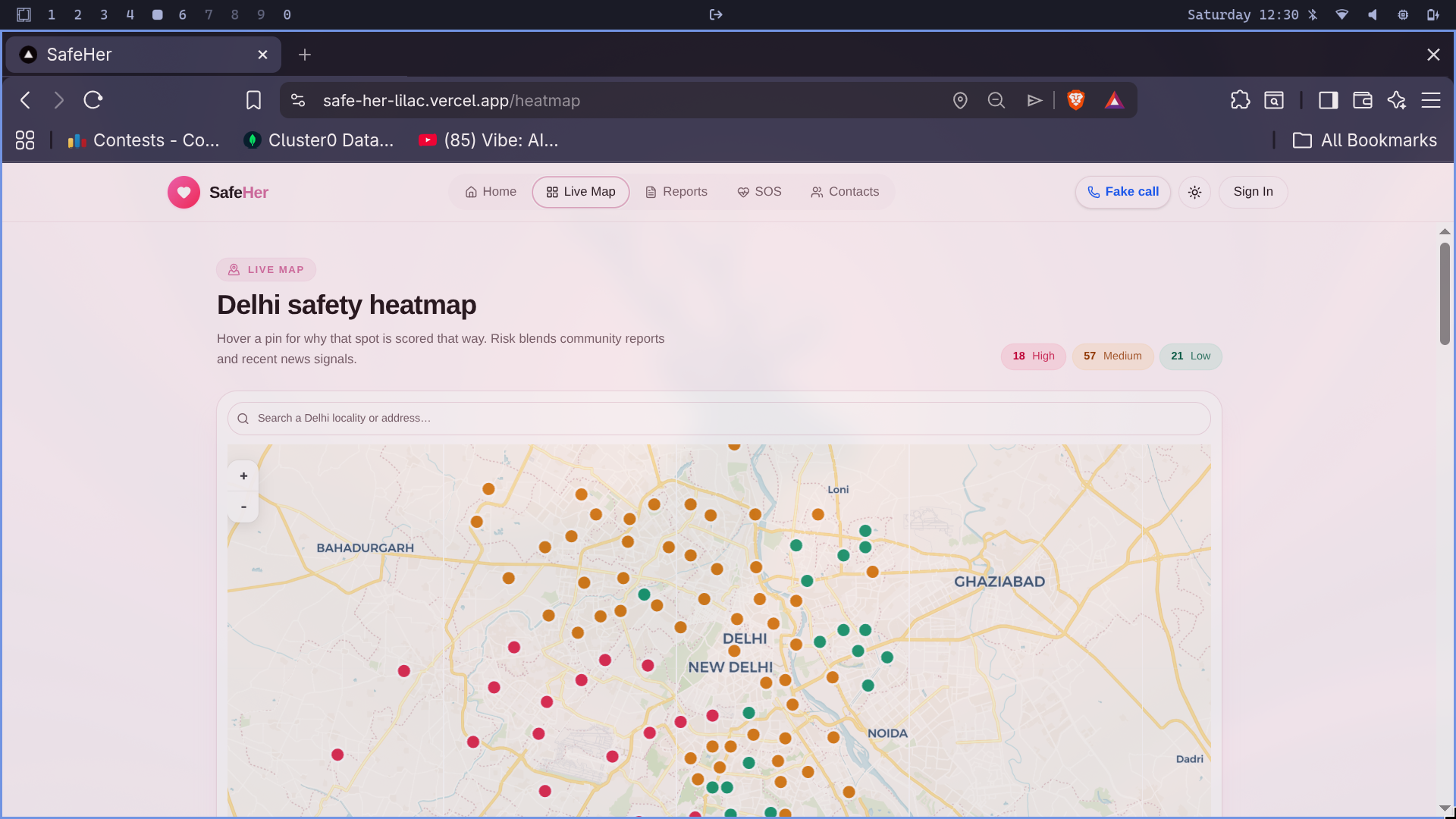
SafeHer is an AI-powered safety platform built for Girls Hack Day, Delhi (Problem Statement 12: AI-powered system that identifies unsafe locations based on community reports and public data).
It answers a simple question:
"Safety isn't just about where crime happened yesterday — it's about understanding what's happening around you today."
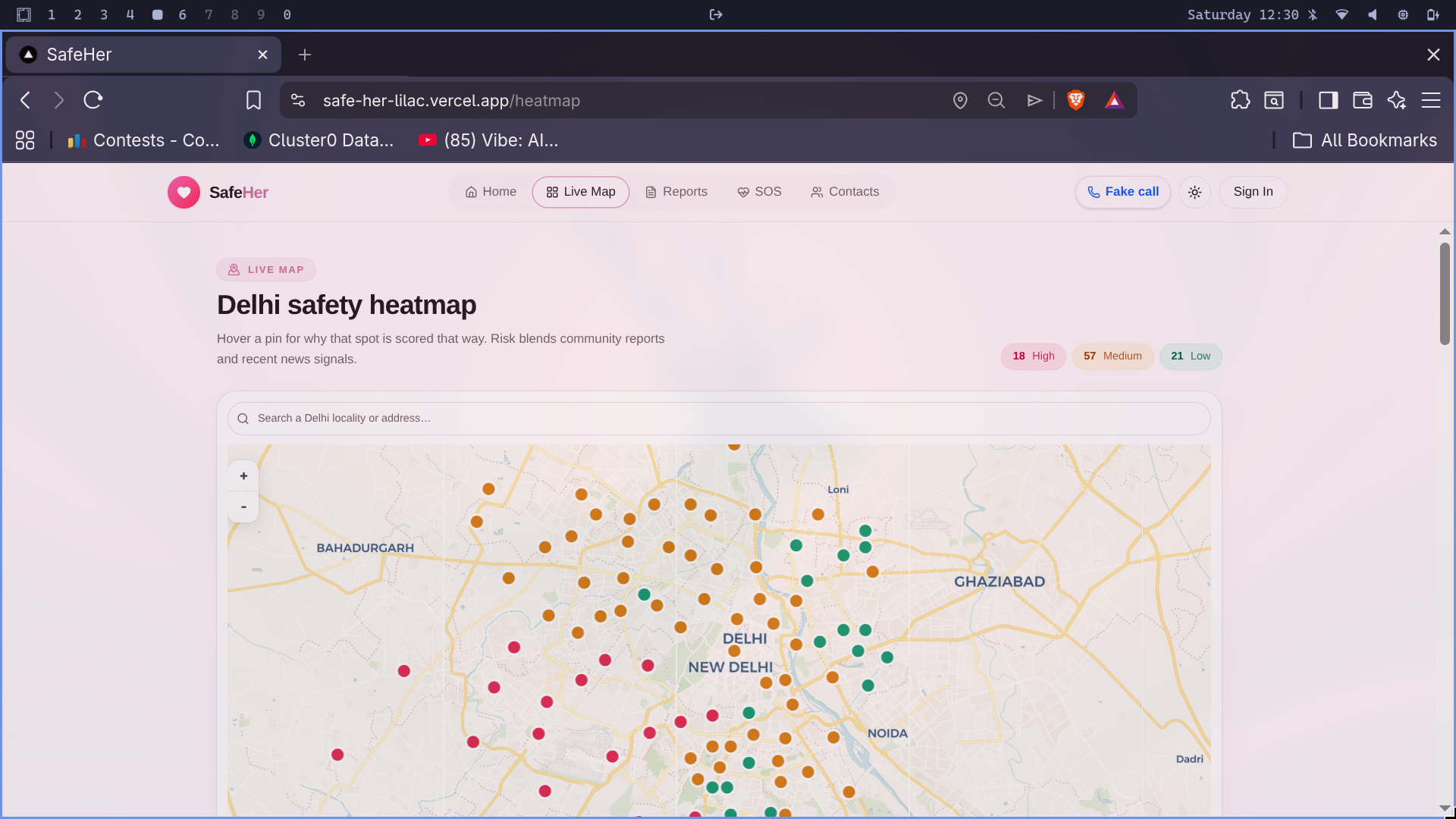
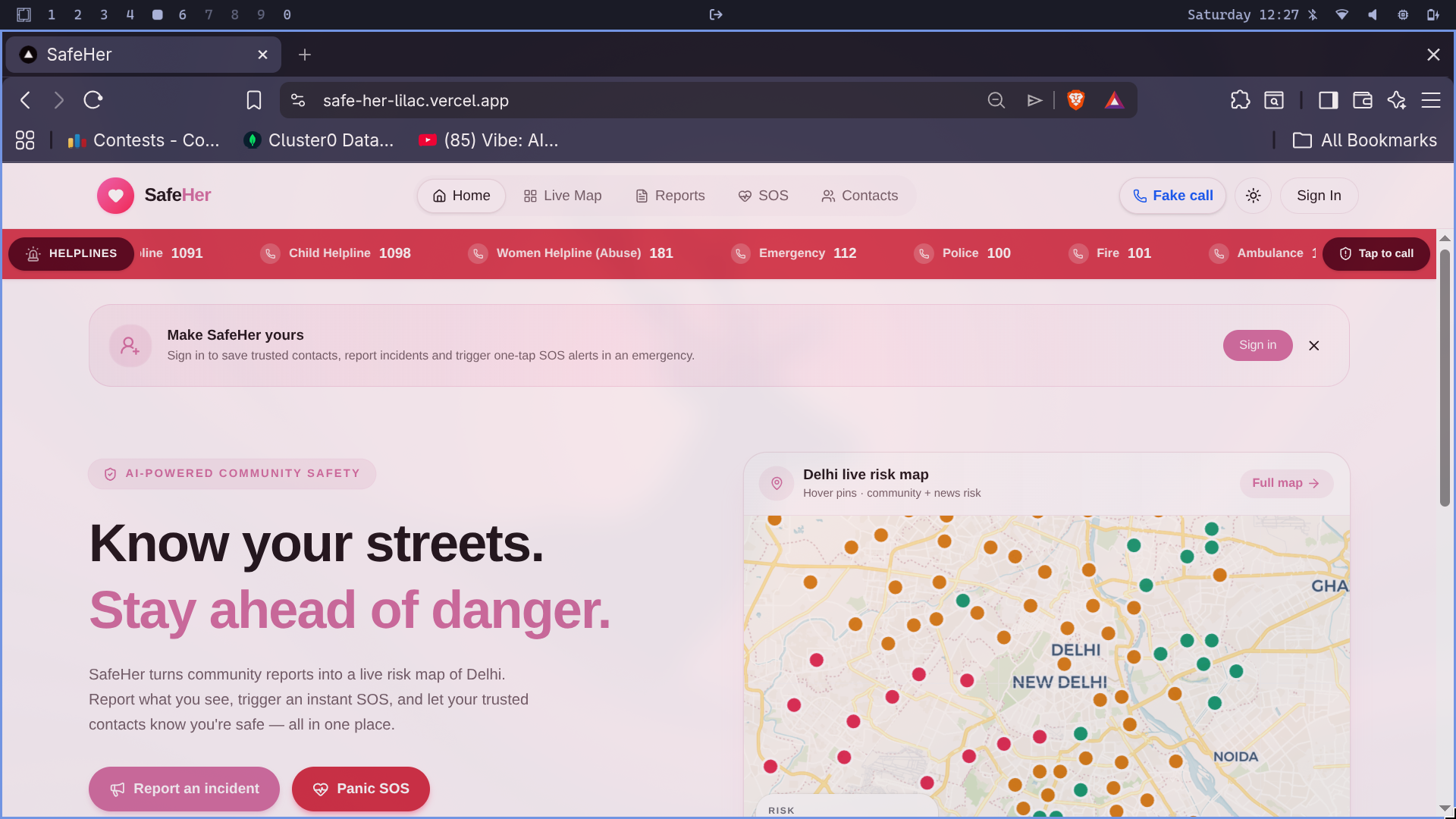
Instead of publishing static crime statistics, SafeHer fuses three signals into one live, explainable safety heatmap:
- Historical crime data — NCRB / data.gov.in district and police-station-level data
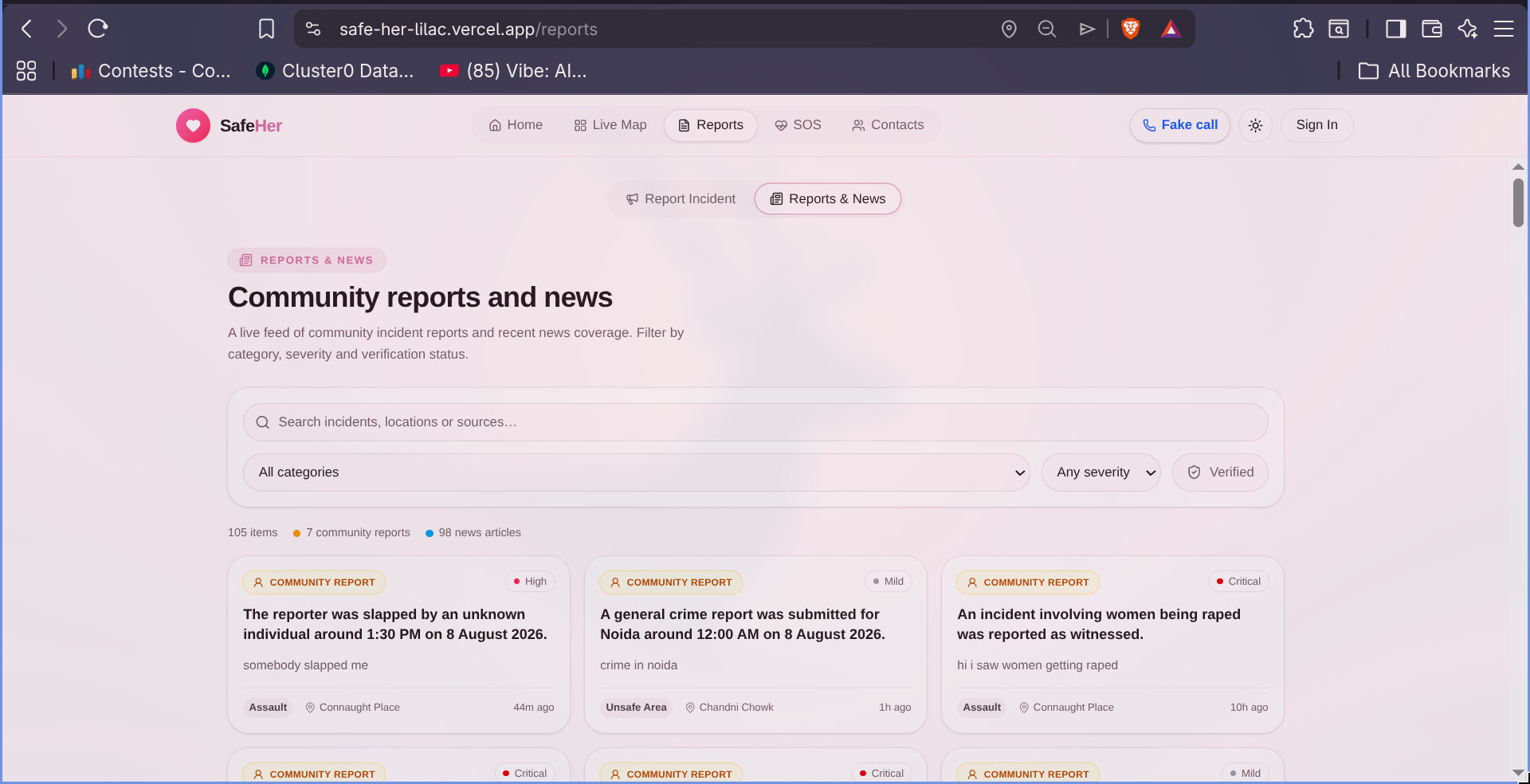
- Live news intelligence — an AI-filtered GDELT pipeline that classifies and dedupes real-world news in real time
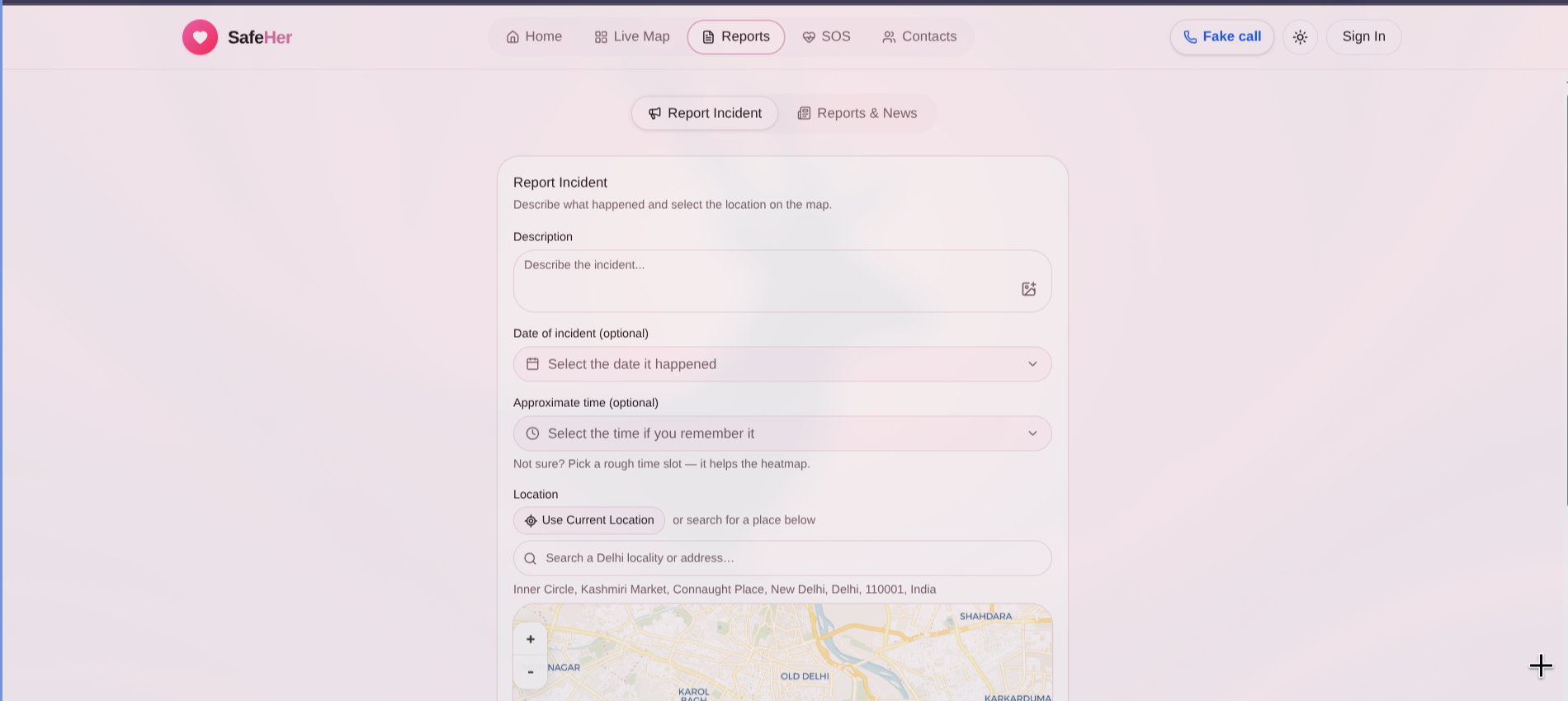
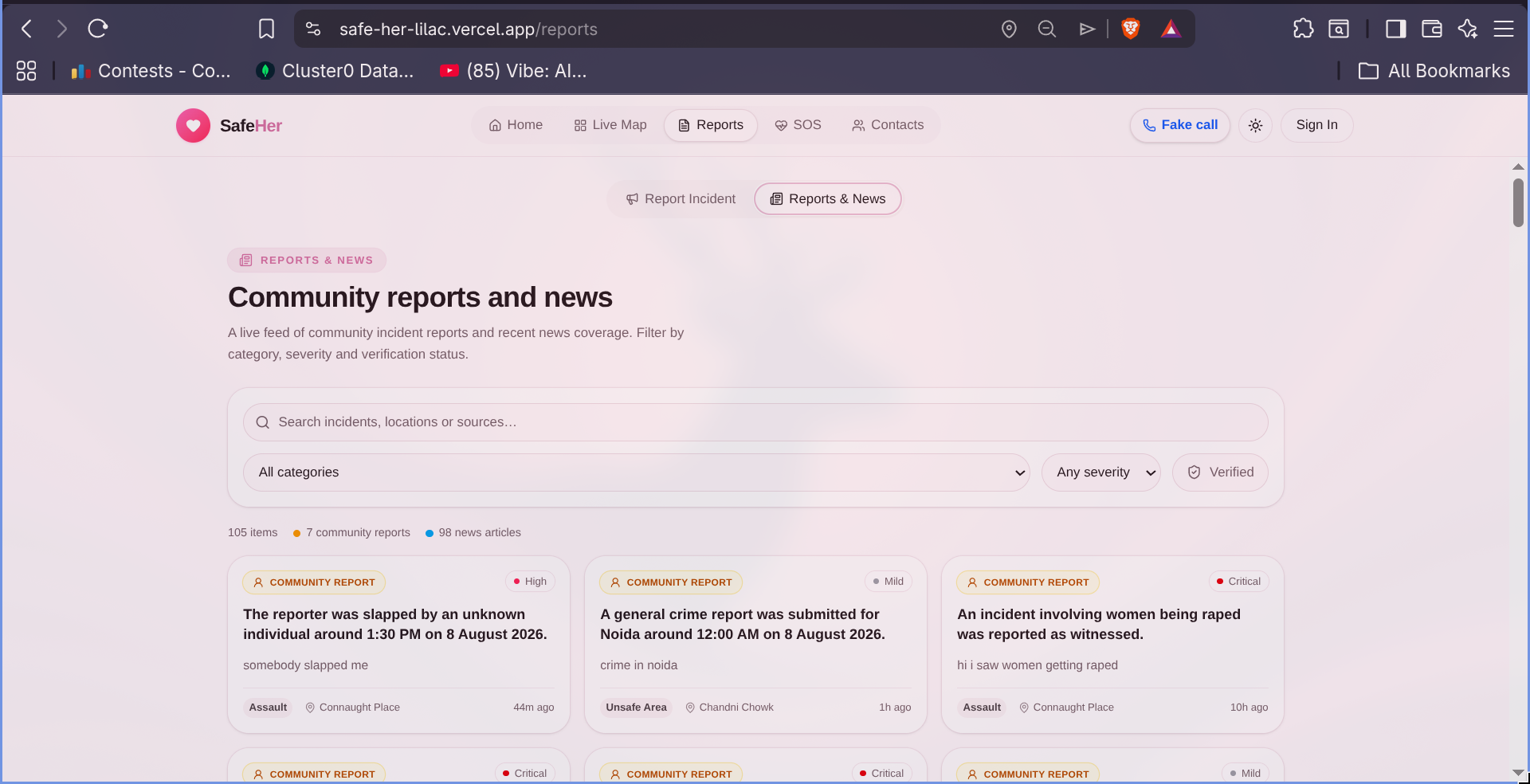
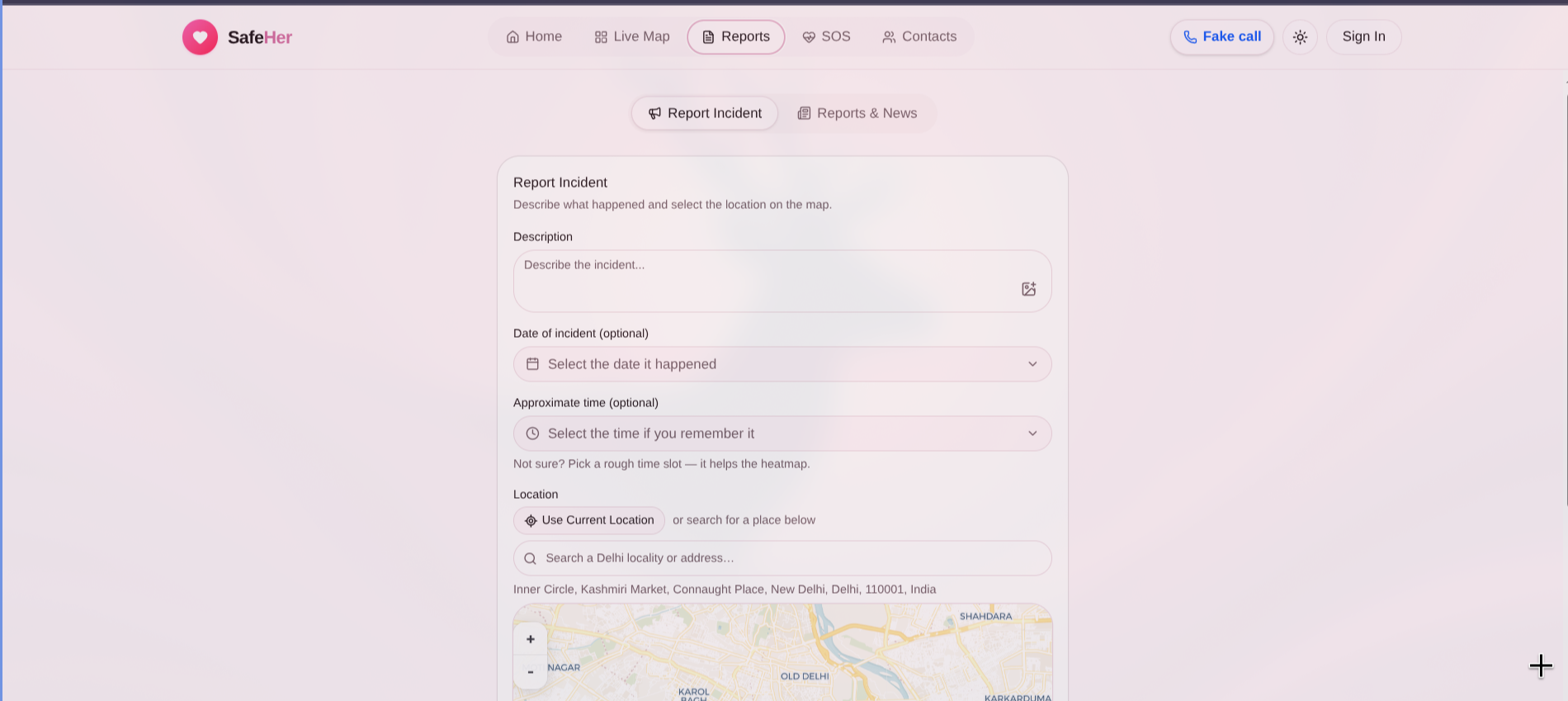
- Community reports — hyperlocal, source-cited incident reports submitted by users (text, photo, GPS pin, category)
Every report is analyzed by Google Gemini (summarized, categorized, severity-scored 1–5, spam-checked via embedding similarity) and automatically corroborated — 3+ independent reports in the same geohash cell within 30 days upgrades it from unverified to community-corroborated, with zero manual moderation.
Data honesty is a design principle. Public crime data is district/station-level, never pin-precise. SafeHer never pretends otherwise — precision comes from fusing that coarse baseline with live, cited, hyperlocal reports.
Why I built it
- The problem is personal and real. Public safety apps stop at "view a map of old stats." By the time government data is published, it's often months old. SafeHer exists to close the gap between what happened and what's happening now.
- Current tools don't explain themselves. A "red zone" with no justification helps nobody. SafeHer is built so every hotspot shows exactly which recent incidents and news events contributed to it.
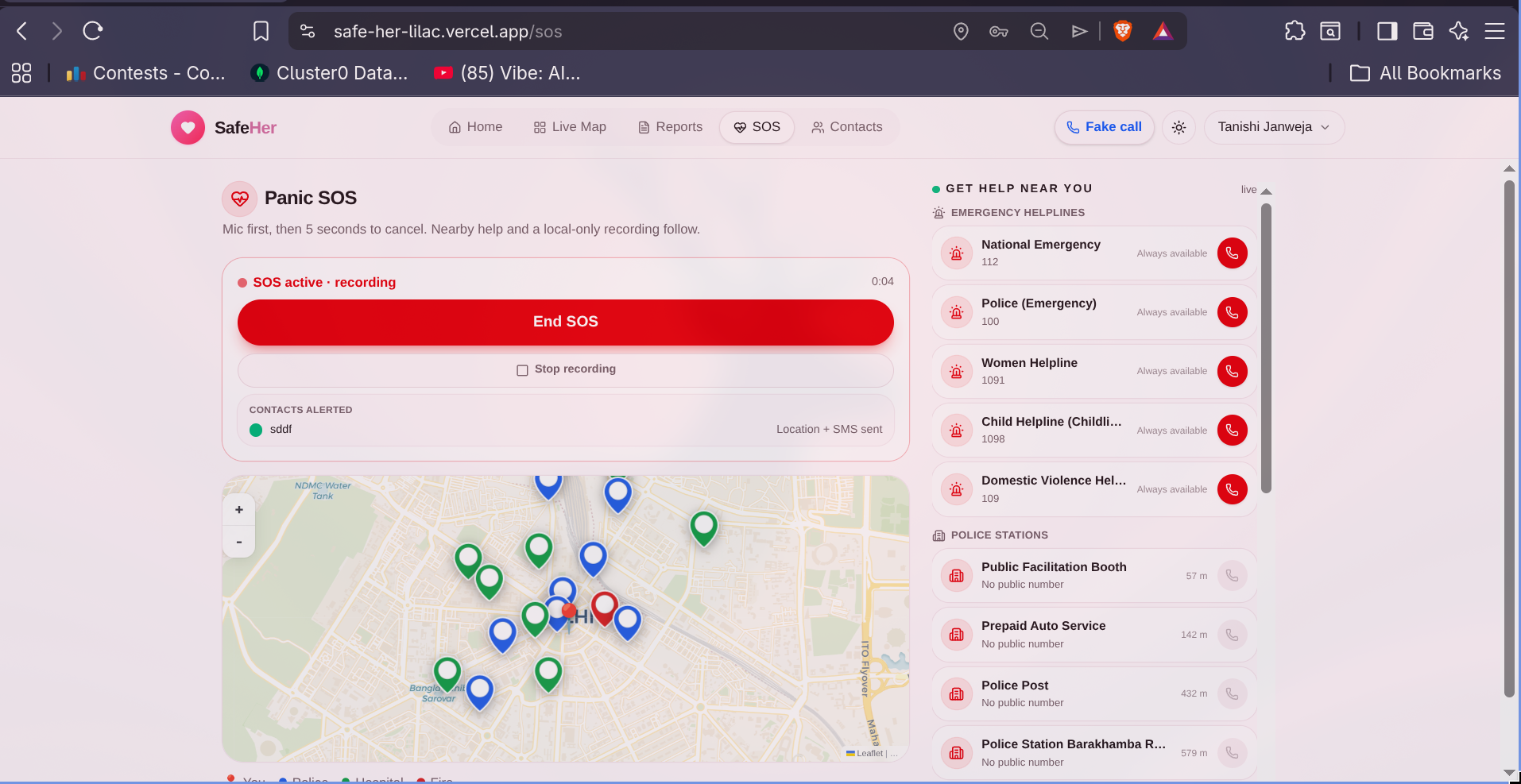
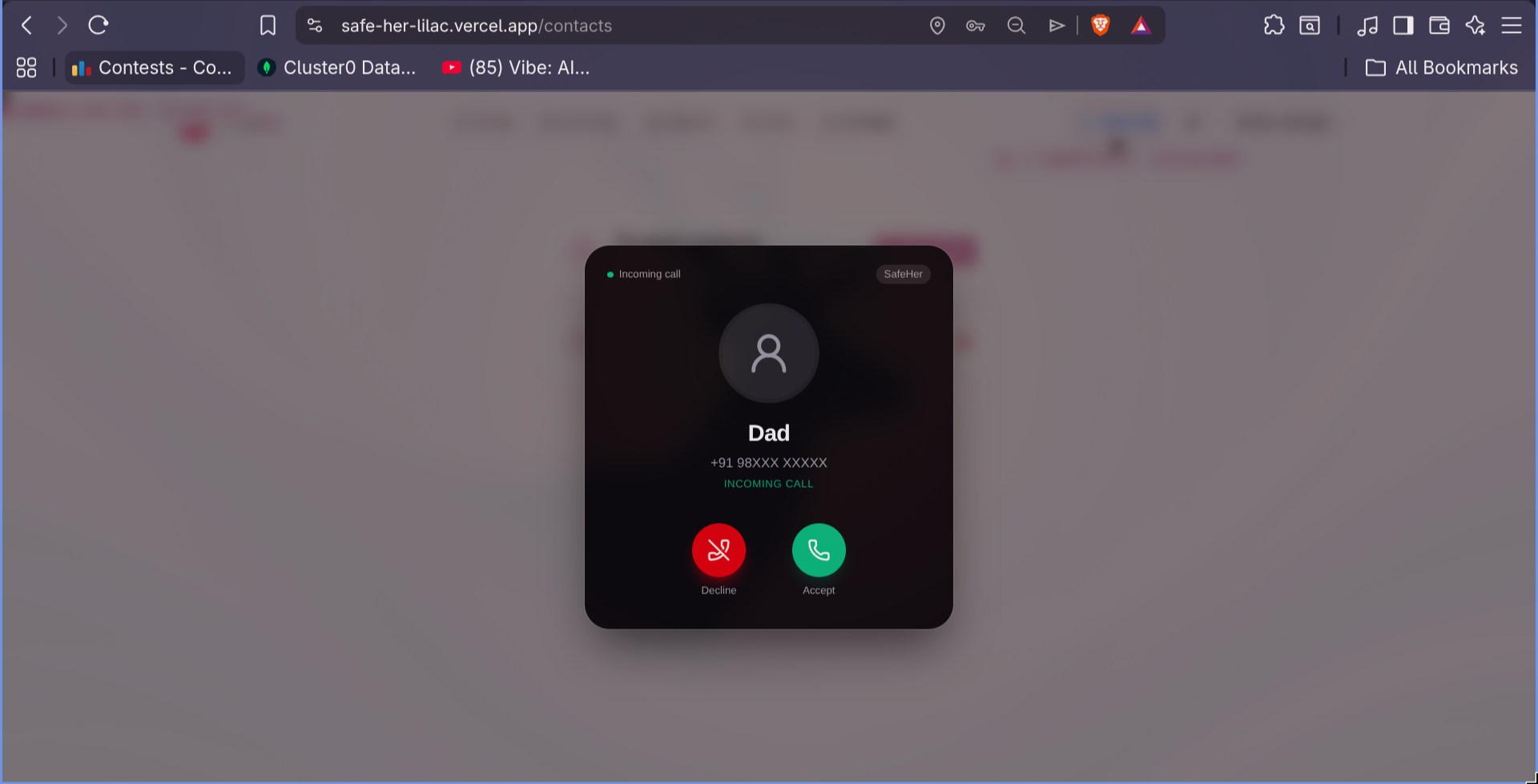
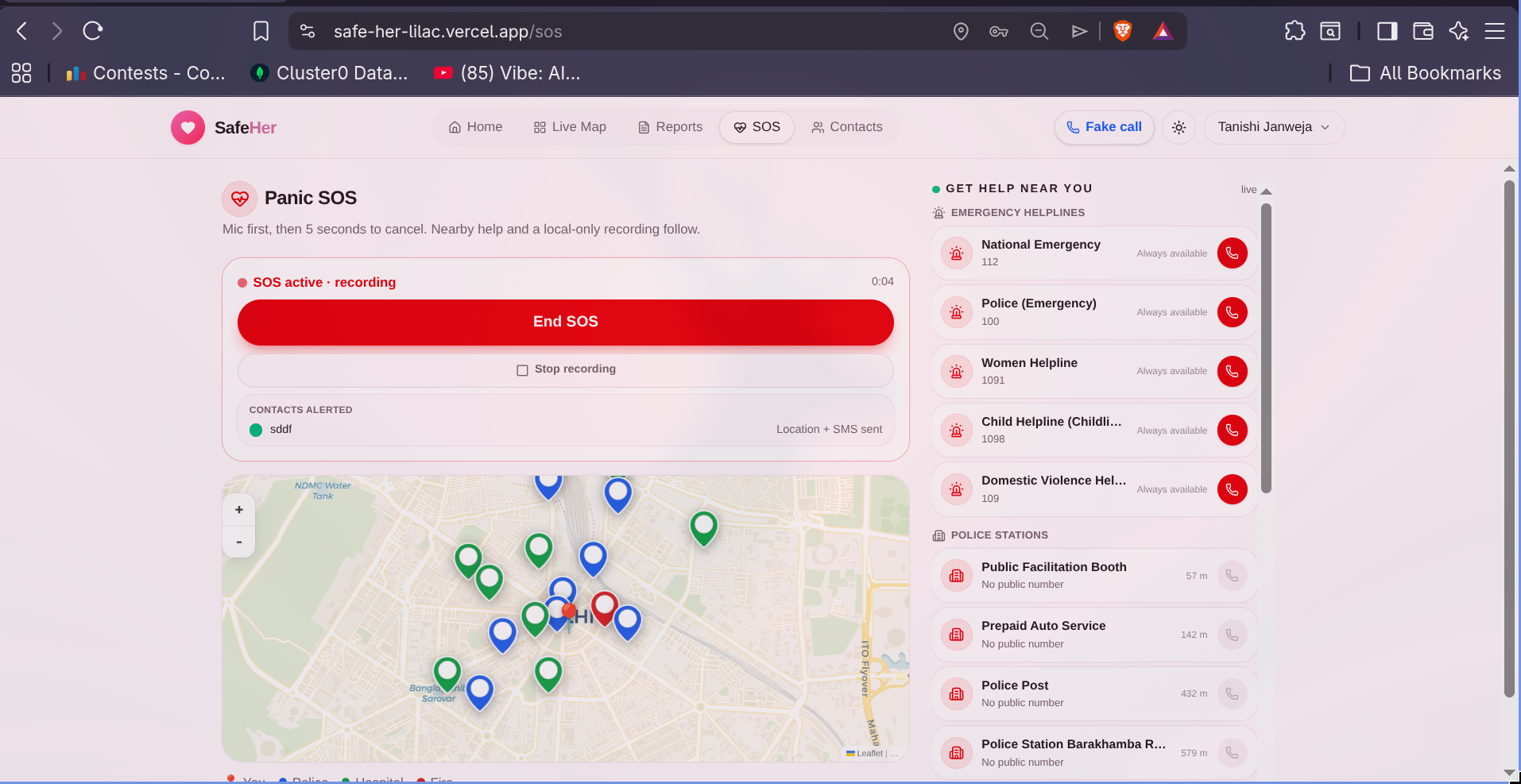
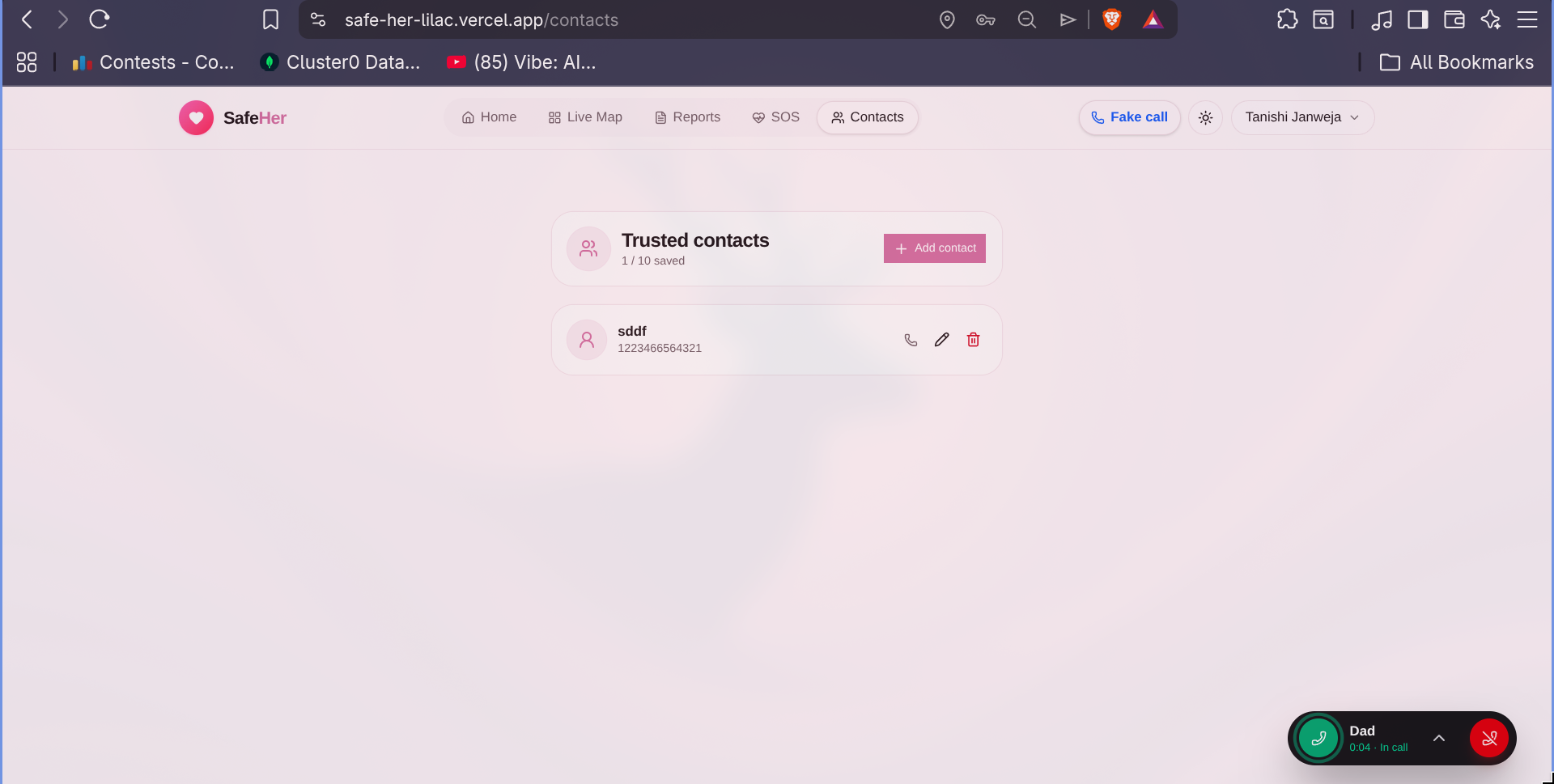
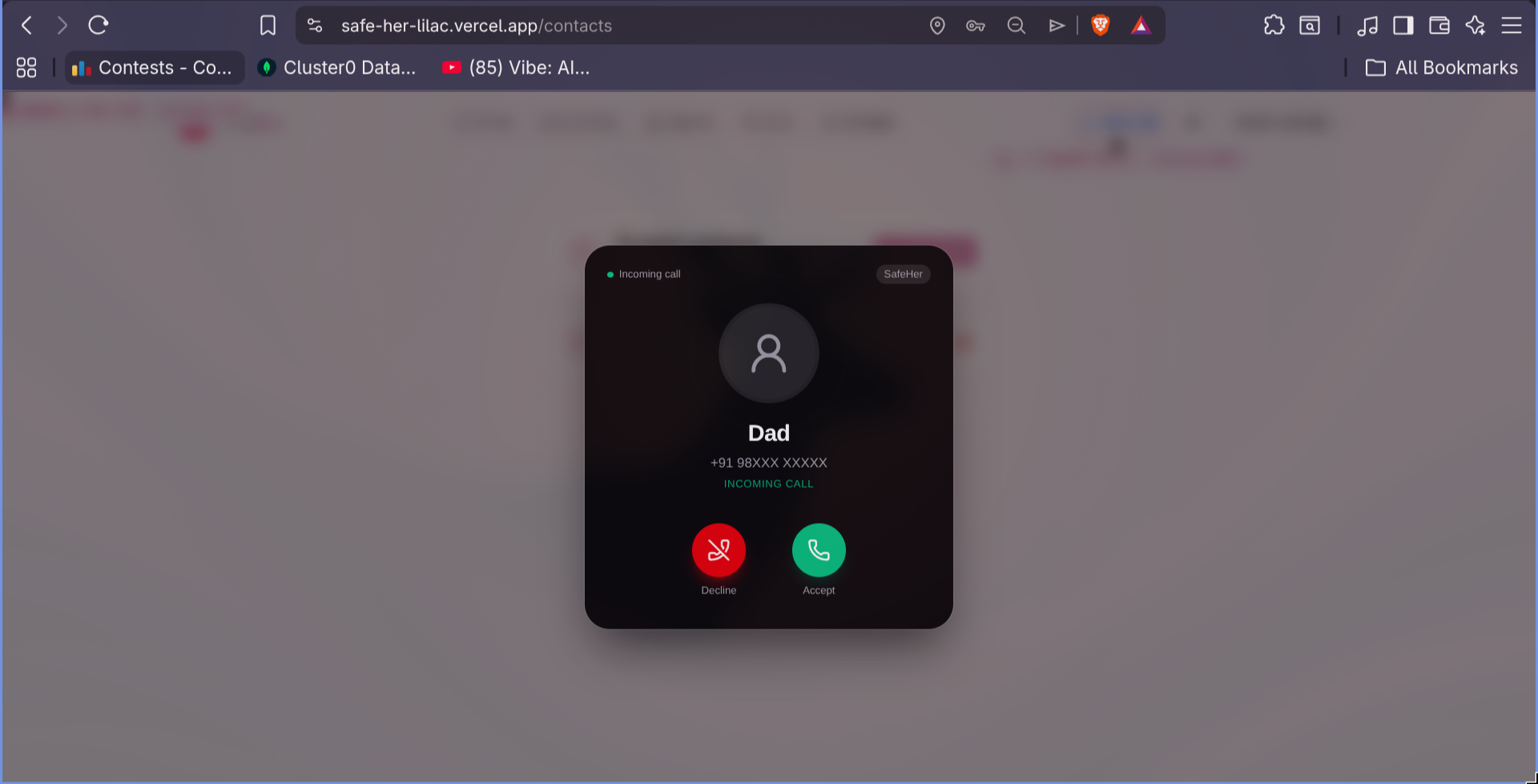
- Current tools are passive. SafeHer is designed to eventually act — with Smart SOS, , and emergency audio recording (all roadmap items), it moves from "telling you a place is unsafe" to "keeping you safe while you're in it."
- A fun engineering challenge. Combining structured crime data, unstructured live news, community crowdsourcing, embeddings, geohash corroboration, and a risk-scoring engine into one coherent system — in hackathon time — was genuinely exciting to build.
How it can be useful for others
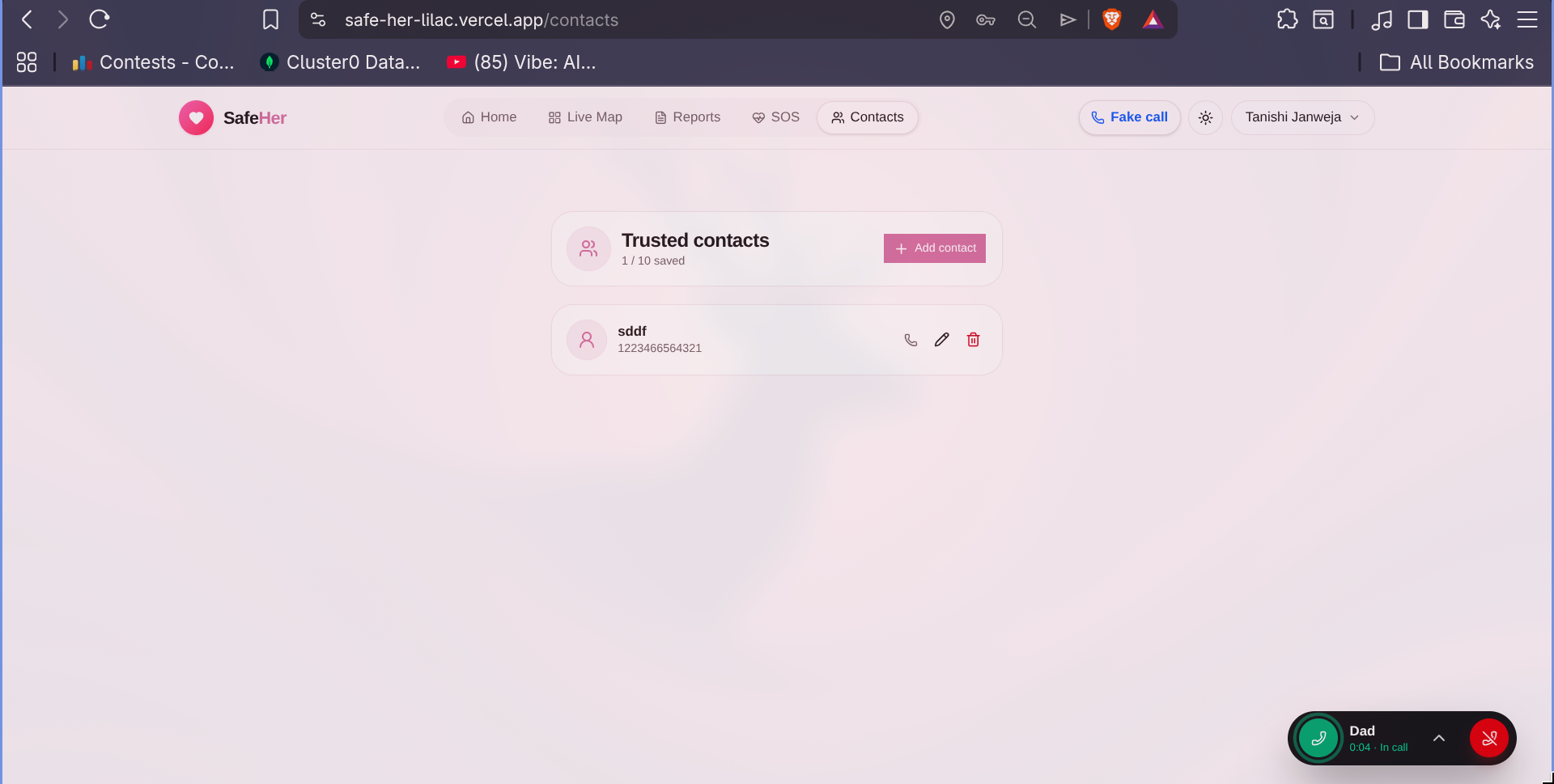
- For women and commuters — street-level, up-to-date safety awareness before you walk, travel, or pick a commute route; a one-tap record of incidents that genuinely happened near you.
- For city planners and NGOs — a crowdsourced, timestamped signal of safety hot-spots that complements (and corrects for the lag of) official crime statistics.
- For journalists and researchers — a publicly visible trail of source-cited community reports and AI-classified news events that can be audited.
- For builders — the repo is a complete, modern monorepo template (Turborepo, Next.js, Hono, Bun, Prisma, PostgreSQL with PostGIS + pgvector, Better Auth, shadcn/ui) that demonstrates how to wire Gemini structured JSON output, embeddings, and semantic similarity into a production-grade full-stack app.
- For the next hackathon team — a realistic, honest take on "AI for public safety" that tackles the hard parts (fakes, duplicates, coarse data, explainability) instead of hand-waving past them.
Links
- GitHub repository: github.com/tanishijanweja/SafeSphereAi
- Readme: README.md
- Setup guide: SETUP.md
- Engineering architecture: docs/engineering/architecture.md
- Product : docs/product/preamble.md
Data & API sources:
- data.gov.in — District-wise IPC crime data (NCRB, crimes against women)
- NCRB — National Crime Records Bureau
- GDELT — Global Database of Events, Language, and Tone
- OpenStreetMaps — Maps / Places / Geocoding
- Google Gemini — Gemini API (structured output + embeddings)
Core libraries:
Next.js · Hono · Bun · Prisma · Turborepo · Tailwind CSS · shadcn/ui · Better Auth
This build was uploaded as a hackathon project


